What’s New with our Latest Platform Update: Health Insights 5.0
At Viome, our mission is simple: make it easier for you to understand what your body is telling you, and empower you to act on it with confidence. That's why we continuously refine our science, our technology, and the way your results appear inside the Viome app
Here’s what’s new:
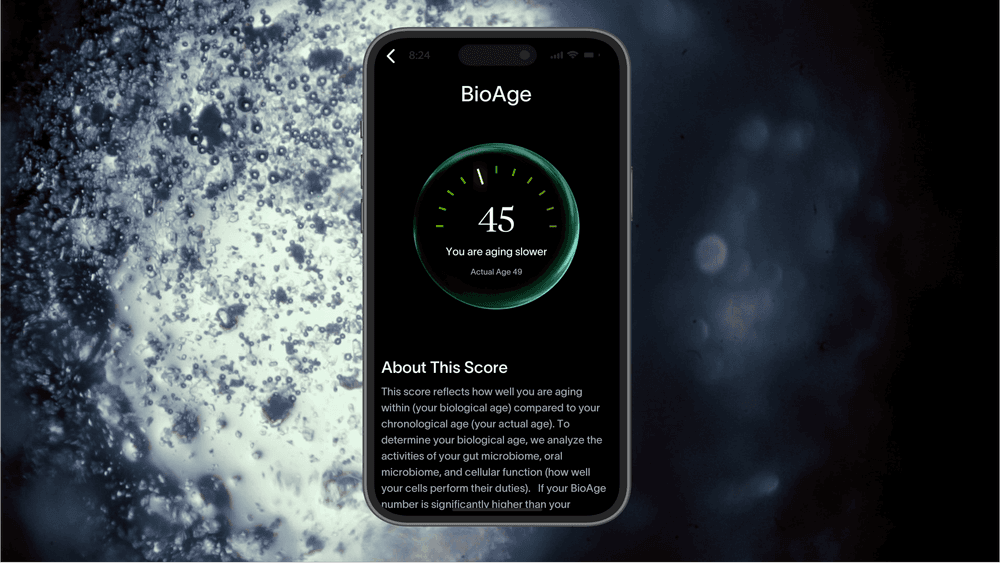
1. BioAge™ V5: Our Most Accurate Biological Age Model Yet
BioAge V5 is our most advanced biological aging model to date. You’ll experience this upgrade with your next test, and we’ll automatically refresh your historical BioAge values so you can continue tracking changes over time—seamlessly and consistently.
This update reflects a core principle at Viome: as our science evolves, your insights get better. Every new dataset strengthens the model, and every test improves its accuracy.
What’s new in BioAge V5
Emerging research shows the oral microbiome plays a critical role in systemic aging, influencing inflammation, vascular health, metabolic regulation, and immune signaling.
BioAge V5 now incorporates oral biology alongside gut and blood data, including:
- Oral microbial species
- Oral functional pathways
- Molecular signals tied to inflammatory cascades and cardiometabolic health
Together, these additions create a more complete, whole-body view of aging—one that better reflects how biological systems interact across the body.
Built on the largest functional RNA dataset in the world
BioAge V5 is trained on Viome’s largest and most rigorously controlled dataset to date, drawn from the world’s largest metatranscriptomic RNA database.
Unlike approaches that rely on a narrow set of biomarkers or single systems, Viome measures active gene expression from both human and microbial cells across saliva, stool, and blood. This allows BioAge V5 to capture the functional biology underlying aging, including:
- Inflammatory activity
- Metabolic and mitochondrial pathways
- Immune signaling
- Microbial functions that interact with human biology
The result is a Biological Age score that reflects how your biology is actually functioning, not just static lab values or isolated markers.
Peer-reviewed, continuously improving
Viome’s methodology is peer-reviewed and published, and BioAge V5 continues to improve as more users test. This places BioAge V5 among the most advanced, data-driven biological aging models available today, and ensures it keeps getting better over time.
2. Updates To a Few Score Names
We’ve updated the names of three pathway scores to better reflect the measurement of the upstream biological pathways driving your health, not standard lab values. Traditional labs measure the amount of a molecule in your blood, while Viome measures the pathways that influence how those molecules are produced, transported, or recycled.
This is important because pathways often change before blood levels do—giving you earlier, more actionable insight into your health.
- LDL Cholesterol Pathways → Cholesterol Transport Pathways
- Vitamin D Pathways → Vascular Defense Pathways
- Homocysteine Pathways → Vascular Oxidative Damage Pathways
Cholesterol Transport Pathways (Formerly LDL Cholesterol Pathways)
Cholesterol Transport Pathways describe how cholesterol moves through the body, between the liver, blood, and cells. These pathways direct cholesterol where it is needed, when it is reused, and for removal when there is too much. Special particles in your blood, called lipoproteins (such as LDL and HDL), transport cholesterol to and from various tissues. When these pathways work well, your cells get the cholesterol necessary to build cell membranes and make certain hormones. Extra cholesterol is cleared out of the bloodstream before it can cause problems.
Your score reflects the activity of genes in your blood that are involved in moving, collecting, breaking down, and removing cholesterol. If these pathways don’t work properly, LDL (“bad”) cholesterol can build up and become damaged. Bad cholesterol is more easily taken up by immune cells called macrophages, which can accumulate in the walls of your arteries and form plaque.
Vascular Defense Pathways (Formerly Vitamin D Pathways)
Vascular Defense Pathways describe processes in your body that protect your blood vessels, defending them from inflammation, stress, and damage. These pathways also support your heart and blood flow by guiding your immune system, keeping vessel walls strong, and helping control blood pressure and tissue repair. This score examines signals in your blood that impact these protective pathways, including how your body manages inflammation, cell growth, the functioning of the vessel lining, and the regulation of your circulation.
Vascular Oxidative Damage Pathways (Formerly Homocysteine Pathways)
Vascular Oxidative Damage pathways affect how your blood vessels handle oxidative stress. Oxidative stress worsens when there are excessive amounts of harmful oxygen-related molecules and insufficient antioxidants to counterbalance them. When these pathways function properly, they protect the vessel walls, allow blood vessels to relax and dilate, and support overall heart and vascular health. When they are under stress, these oxygen-related molecules damage the vessel's structure. This score looks at activity in your blood related to oxidative stress and your body’s ability to defend against them.
3. Unified Score Standardization
We’ve made an important improvement to your Viome experience. When you retest, you’ll notice that your scores now follow a consistent, universal scale, making them easier to interpret and compare across the app.
What changed
Previously, a score like “50” could mean something different depending on the pathway. Now, all scores follow:
- 0–35 → Attention
- 36–64 → Improve
- 65–100 → Maintain
Evolving Your Experience With Our Science
Health Insights 5.0 reflects Viome's ongoing commitment to enhancing your experience—by investing in the science that improves your health, refining our product experience, refining our models, and making it easier to understand the relevance of your results.