A Healthier, Happier, More Productive Workforce: Lessons from Viome’s Personalized Nutrition and Coaching Pilot with MSK
1. Introduction
Mitchell Silberberg & Knupp LLP (commonly referred to as MSK) is a well-established full-service law firm. The firm is noted for having “many partners choosing to spend their entire careers at the firm” and benefits from both diversity of perspectives and organizational stability. As the professional workforce faces an unprecedented wellness challenges with mental health, anxiousness, and burnout reaching alarming levels across all practice areas and career stages, MSK recognizes that traditional approaches to wellness, such as gym membership, occasional seminars or generic employee assistance programs, have proven insufficient to address the depth and complexity of these challenges. The demands of a high pressure legal practice require a more comprehensive and proactive approach to supporting employees’ overall well-being.
Viome provides the industry's only direct-to-consumer healthcare test that analyzes microbial and human gene expressions (RNAs) to understand not just what microbes are in the gut and oral microbiomes, but also what they are actively doing. As gene expression activities can be changed through diet and lifestyle, Viome’s Full Body Intelligence™ provides comprehensive molecular health insights to gut, oral, heart, brain, cellular, immune, inflammation, and biological age. In conjunction with personalized food recommendations and made-for-you biotics and supplements according to test results, it enables customers to modulate, monitor, and improve their overall health.*
This MSK x Viome Health Program pilot represents the commitment of both parties to fostering a culture where professional excellence and personal well-being are not competing priorities but complementary foundations of success. The pilot has proven to deliver many benefits to MSK participants, including weight loss, improvement in gastrointestinal symptoms, reduced feelings of sadness or severity of anxiety.* Upon the pilot completion, MSK has decided not only to continue, but also to double the participants in the program.
2. Pilot Design
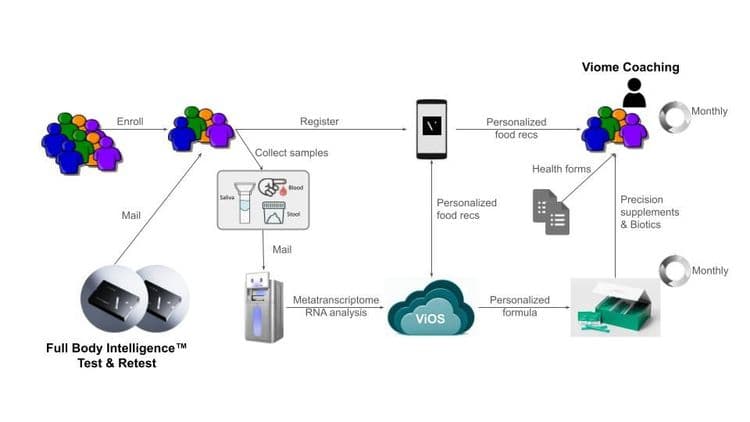
Figure 1. MSK x Viome Health Program pilot design illustration
The 'MSK x Viome Health Program' is a structured 6-month pilot, as detailed in Figure 1. This initiative extends an enrollment opportunity to MSK employees nationwide. Participants receive two Viome Full Body Intelligence™ test kits: an initial kit upon enrollment and a retest kit at the conclusion of the pilot. With each test kit, the participants collect their samples (blood, saliva, and stool) per instructions, and mail them back to Viome's CLIA-certified laboratory for processing. The participants are required to register their kits via the Viome App or Viome website. The registration process includes a comprehensive onboarding questionnaire encompassing health goals, lifestyle, dietary preferences, and many clinical validated questionnaires including PROMIS (Patient-Reported Outcomes Measurement Information System) for gastrointestinal symptoms, PHQ-9 (Patient Health Questionnaire-9) for mood and mental health, GAD-7) for anxiousness, and more. The questionnaire, in conjunction with metatranscriptome (RNA) analysis results from participant samples, is processed by Viome’s ViOS platform. ViOS generates molecular health insights, personalized food recommendations and custom formulations for supplements and biotics. Recommendations are accessible within the Viome App, while precision supplements and biotics are manufactured and shipped to participants on a monthly basis. The pilot also incorporates monthly coaching sessions, conducted both individually and in groups, designed to support participants' health journey. These sessions facilitate compliance checks for diet and supplements, provide a forum for discussing progress and challenges, and enable collaborative problem-solving. Specific to this pilot, participants are additionally required to complete six health-related questionnaires at both the initial test and retest: the SF-20 Quality of Life Survey, Perceived Stress Scale, Subjective Happiness Scale, Epworth Sleepiness Scale, PROMIS Cognitive Function, and the Individuals Work Performance Questionnaire.
3. Pilot Results
The pilot program initially enrolled 25 participants. Nineteen of these individuals successfully completed both Full Body Intelligence™ tests and benefited from 6-7 months of precision supplements and biotics. Within this group of 19, 12 participants attended every coaching session, and 15 attended the final session following their retest kit submission. Crucially, all 19 consistently submitted the required questionnaires at both the initial and retest kits. The results presented herein are from these 19 participants.
Full Body Intelligence™ test molecular score improvements
The Viome Full Body Intelligence™ test provides a holistic view of health, analyzing gut and oral microbiomes, cellular health, and quantifying over 60 molecular scores, including biological age. Following a six-month nutritional intervention period within the pilot, retest data indicated that 50% of participants achieved improved top-level health scores across seven key categories: Gut, Oral, Heart, Brain, Cellular, Immune, and Inflammation. The Cellular Health and Immune Health scores exhibited the most improvements. Furthermore, participants had an average reduction in biological age of 1 year and 3 months at the retest compared to their initial assessments.
Personal health improvement*
When asked the question ‘How do you feel now relative to before your previous Viome recommendations?’ at the retest. 3 participants answered ‘Much better’, 12 answered ‘Better’, and 4 answered ‘Same’. Overall 15 participants (79%) reported to have improvements in their health holistically.* It manifested in weight loss, improvements in productivity, energy, gastrointestinal (GI) symptoms, and/or mental health symptoms.*
Weight loss*
Eleven (11) participants (58%) reported to have lost weight at the retest.* The most lost is 33 lbs and least 3 lbs, averaging at 10 lbs. It is worth noting that the participant who lost 33 lbs continues to lose weight after the pilot. Four (4) participants (21%) reported to stay at the same weight at the retest, 3 gained 1 lb, and 1 gained 3 lbs.
Improvements in GI symptoms*
Four PROMIS GI questionnaires - Gas & Bloating, Constipation, GERD, and Diarrhea - are analyzed at the initial test and the retest. Participants' answers are used to compute a PROMIS T-Score, which is then converted to a symptom severity category per PROMIS standard: Severe (≥ 60), Moderate (55–59), Mild (45–54), and Minimal/No symptoms (≤ 44). Figure 2 shows the participants with Mild and up severities in these 4 symptoms. All of them are observed with reduced participants, demonstrating the improvements in these symptoms benefited from the pilot.*
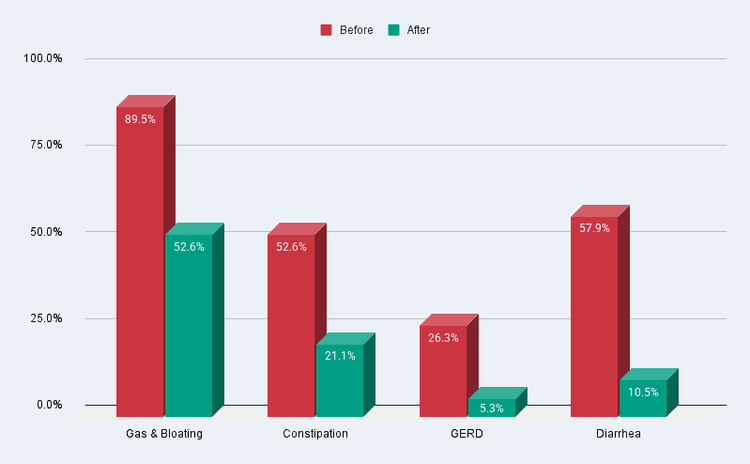
Figure 2. The change of participants with Mild and up PROMIS GI symptoms.
The y-axis represents the percentage of participants out of 19 who had the respective GI symptom at Mild and up by the PROMIS questionnaires at the initial test (‘Before’ in red color) and the retest (‘After’ in green color). All four symptoms are observed with fewer participants at the retest.
Improvements in mental health symptoms*
PHQ-9 and GAD-7 are two clinically validated questionnaires administered during the kit registration. The PHQ-9 is a 9-question multipurpose instrument for monitoring and measuring sadness and mental health. PHQ-9 score is obtained by adding scores for each question. Only people who score ≥ 2 in the first two questions (PHQ-2) continue to finish the remaining 7 questions. The interpretation of the PHQ-9 score is defined as Severe (20-27), Moderately Severe (15–19), Moderate (10–14), Mild (5–9), and None-minimal (0–4).
The GAD-7 is a 7-question, easy to perform initial screening tool for anxiousness. GAD-7 score is obtained by adding scores for each question. The interpretation of the GAD-7 score is defined as Severe (≥ 15), Moderate (10–14), Mild (5–9), and Minimal (0–4).
Participants with no symptoms related to mental health or anxiousness are excluded in the analysis. A move from a more severe category to a lesser one is considered as ‘Improved’, from lesser to more severe as ‘Worse’, same category as ‘Same’. Figures 3 and 4 show the changes of self-report sadness or mood changes measured by PHQ-9 and anxiousness measured by GAD-7 at the retest (6-month) follow-up, compared to the initial test. The majority of participants, 71.4% and 60% respectively, have shown improvements in mood or anxiousness at the end of the pilot.*
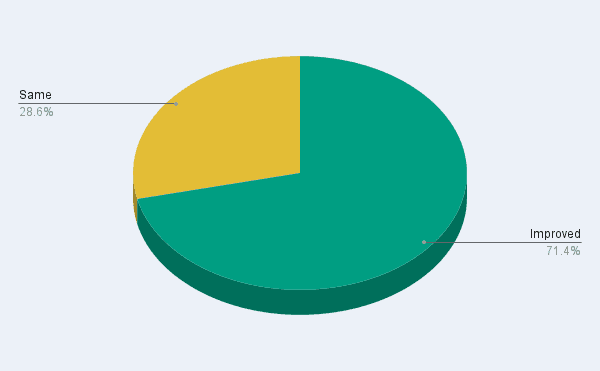
Figure 3. Changes in self-reported sadness in PHQ-9 at the retest follow-up.
Seven participants had ≥ 3 PHQ-9 score at the initial test. At the retest 6 months later, 5 (71.4%) participants had improvement, and 2 (28.6%) remained the same.

Figure 4. Changes in self-reported anxiousness in GAD-7 at the retest follow-up.
Ten participants had ≥ 3 GAD-7 score at the initial test. At the retest 6 months later, 6 (60%) participants had improvement, 2 (20%) remained the same, and 2 (20%) got worse.
Lifestyle and behavior changes
Feedbacks from the coaching sessions show that participants have experienced increased mindfulness around nutrition and lifestyle, improved understanding of how to eat healthfully, greater dietary diversity and improved meal quality, as well as healthier habits influencing family members. More than the test results, such changes have a long lasting impact on individuals and their families.
Energy and productivity
The answer rate of the six additional health-related questionnaires at both tests is lower than kit registration required questionnaires. Out of participants who did answer, there is a trend of increased energy based on the Epworth Sleepiness Scale and increased productivity based on the Individuals Work Performance Questionnaire.*
In their own words
The participants have reported benefits experienced from this pilot. Many shared compelling accounts of improved health outcomes, including a significant reduction in joint discomfort and positive changes in family eating habits.* Notably, some participants reported improvements in their biomarkers, validated by their doctors.* The testimonies below collectively emphasize the pilot’s comprehensive impact, extending beyond typical wellness offerings.
From several participants who reported significant decline in joint discomfort*: “I thought my joint achiness was just a sign I was getting older, it’s gone”.
From several participants who reported family members engaging in mindful eating: “My teenage daughter has started emulating my eating habits, no more spicy Cheetos”
From one participant whose doctor said her biomarker was no longer a concern.
From several participants who shared an overwhelming reaction to more than just a gym membership: “My friends at other firms can’t believe how comprehensive our program is”.
4. Discussion
Coaching engagement
Health coaching offers a powerful pathway to improved well-being, providing personalized support and guidance to help individuals achieve their health goals and make sustainable lifestyle changes. The evidence base clearly demonstrates that participants often experience better management of health and wellness, improved dietary habits, reduced stress, and a greater overall sense of well-being when properly supported through structured coaching relationships. However, our pilot program experience has revealed that the path of health coaching isn't without its hurdles. One of the primary challenges we encountered lies in participant engagement and adherence, a pattern that mirrors broader industry findings. Despite initial enthusiasm, maintaining consistent motivation and following through with recommended changes proved difficult, especially when faced ingrained habits, busy schedules, or unexpected life events.
The attendance patterns of coaching sessions during this pilot clearly reflected this engagement challenge. Our data showed inconsistent participation rates, with several participants missing multiple sessions despite expressing initial commitment to the program. Additionally, the gap between knowing what constitutes healthy behavior and actually integrating those behaviors into a high-pressure environment should not be disregarded either.
Method limitations
The pilot has demonstrated promising health benefits among the 19 participants who completed the program. Nevertheless, several methodological limitations constrain the interpretation and generalizability of these findings. The pilot's single-arm design, lacking a control group, prevents definitive conclusions about whether the observed improvements resulted from the intervention itself or from natural variation, placebo effects, or other uncontrolled factors.
Although all participants completed the required questionnaires, engagement varied considerably throughout the program. Response rates dropped significantly for optional assessments, and attendance at coaching sessions was inconsistent, with only 12 participants attending every session and 15 attending the final session. This variable participation likely introduces bias, as results may disproportionately reflect outcomes from the most engaged and motivated participants.
Given the small sample size and missing data, the analysis appropriately presents descriptive statistics rather than inferential testing. While this approach avoids overstating the statistical significance of findings, it also means the analysis cannot determine whether the observed changes represent meaningful improvements beyond what might occur by chance alone.
5. Next Phase
While our pilot program encountered the expected challenges of implementing health coaching in a demanding professional environment, the tangible results speak to its transformative potential. Participants experienced meaningful health improvements that extended far beyond traditional wellness offerings: measurable weight loss, significant improvement in gastrointestinal symptoms, reduced sadness and anxiousness, substantial decline in joint discomfort, enhanced biomarkers across multiple health indicators, and notably, positive ripple effects extending to participants' family members.*
The compelling results from the pilot have led MSK to continue the program with double the participant capacity. Furthermore, the next phase is strategically designed as a rigorous two-arm controlled trial. The intervention arm will replicate the successful pilot program methodology, while a newly introduced control arm will collect longitudinal data through questionnaires administered at multiple predetermined timepoints. This comparative framework will strengthen the statistical power to validate the health benefits observed during the initial phase.
Drawing from both the pilot insights and evidence-based wellness practices, we have identified five targeted enhancements to amplify the program effectiveness and participant success.
Increase the frequency of coaching sessions to provide more consistent touchpoints. This intensified engagement model will improve adherence rates, enable real-time obstacle resolution, and provide the sustained guidance necessary for lasting behavior change in high-pressure environments.
Incorporate group visits into the program to harness the power of peer support and shared accountability. This approach directly addresses the isolation often experienced during individual wellness journeys while fostering a supportive community, particularly valuable given the shared professional stressors and time constraints.
Explore implementing a structured rewards system that bridges the gap between long-term health benefits and immediate motivation. This framework will celebrate both process commitments (consistent participation, tracking compliance) and measurable outcomes (improved health metrics, stress reduction), creating sustainable motivation pathways.
Introduce diet and activity tracking to provide objective data that can inform coaching conversations and demonstrate progress over time. Digital tracking tools can help participants become more aware of their patterns while providing coaches with concrete information to guide recommendations.
Continue to develop dedicated resources for test and supplement issues to address the technical and logistical challenges that emerged during the pilot.
These enhancements reflect the collaborative commitment between MSK and Viome to continuous improvement and participant success. By systematically addressing the engagement challenges identified in our pilot while building upon its proven successes, we are positioned to deliver an even more impactful wellness experience and workplace satisfaction.